Klemen Gradisar

People and pathway

Do our selection, our staff and our pathway serve the model?

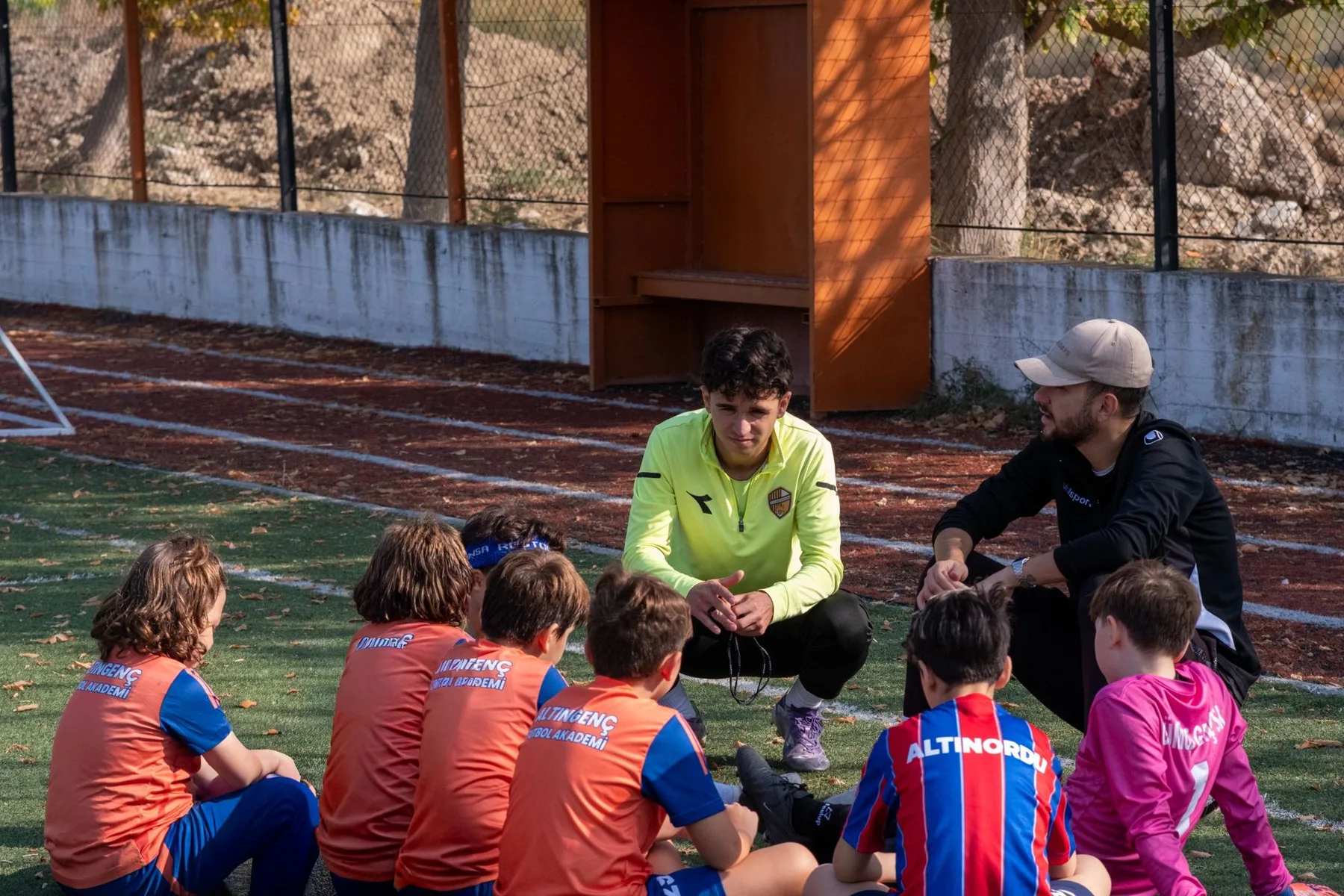
Two coaches talk with young players on a training pitch in İzmir, Türkiye
Two coaches talk with young players on a training pitch in İzmir, Türkiye.Photo: Doğan Alpaslan Demir, Pexels License

Today the model becomes the measure for people. Who you select, who coaches which age group, and how a player reaches the first team. After today you can finish your Academy Blueprint and send it to the course group.

Day 3, Thursday 17 December 2026
Live online session, about two hours, with Arabic interpretation

Stories

Seba Tawfiq

Principle. Make room for the player nobody has a category for

Klemen was technical director at PSG Academy Jeddah when she trained there in 2018.

  • Seba Tawfiq was born in Jeddah in 2005.
  • Today she plays midfield for Al-Ittihad and wears number 10.
  • For Saudi Arabia she has 32 caps and 8 goals in football and 11 caps in futsal, as of 2 December 2025 according to Wikipedia.

Lesson. Give the outlier a real place in the group. The pathway for a player like her may not exist yet when the talent appears.

Discussion. Who in your academy is the player nobody has a category for yet?

Sources. Wikipedia, Seba Tawfiq

Selection meeting, two players and one place

Your model says that after losing the ball we win it back together within seconds, and that in attacking organisation we play forward through the lines.

Player A, U14 central midfielder

  • Strongest in duels in the group, and quickest over 20 metres.
  • Scores from set pieces. Coaches like his presence.
  • Presses hard after a loss, mostly on his own.
  • Rarely looks around before he receives.

Player B, U14 central midfielder

  • Smaller, loses many duels, slower over 20 metres.
  • Looks around before receiving and plays forward through the lines.
  • Often first to react after a loss, though he rarely wins the ball himself.
  • After a regain he finds the free player.

Two invented profiles for the exercise. They describe no real player.

Who stays? Make your choice, then open the reveal.

What the two profiles left out

Reveal birth month and maturityHide the reveal

Player A was born in January and is an early maturer, close to adult height already.

Player B was born in November and is a late maturer.

At a Belgian under-14 talent detection tournament in 2009, 66 per cent of the 613 players were born from January to June. RBFA, Bob Browaeys, 2012

Judge both against the model again. Which behaviours belong to the player, and which to his birthday?

Virgil van Dijk for the Netherlands against Austria in Vienna, 2016
Virgil van Dijk for the Netherlands against Austria in Vienna, 2016.Photo: Ailura, CC BY-SA 3.0 AT, Wikimedia Commons

Virgil van Dijk, the boy they called lazy

Principle. Know the person before you judge the attitude

Virgil van Dijk joined the Willem II academy at 10. Some youth coaches thought he was lazy, partly because he sometimes arrived late. Academy director Jan van Loon asked why. Van Dijk's parents were divorced, and he often collected his younger brother and sister from school and made their lunch before catching the bus to training. He also washed dishes part time. Willem II made him a contract offer too late. Groningen signed him at 19, and in 2018 Liverpool made him the world's most expensive defender at 75 million pounds.

Lesson. Ask about the player's life before you label his behaviour. A lot of talent is lost to a label.

Discussion. Which player in your group have you judged without knowing what happens at his home?

Sources. BBC Sport, 23 April 2025

That's why I always say it takes a village to raise a child.

Jan van Loon
Harry Kane for Tottenham against Colchester United in the FA Cup, 2016
Harry Kane for Tottenham against Colchester United in the FA Cup, 2016.Photo: enviro warrior from england, CC BY-SA 2.0, Wikimedia Commons

Harry Kane, the late developer two clubs let go

Principle. Judge the player against the model, after the birthday

Harry Kane was born on 28 July, late in the English school year. Arsenal took him at eight and released him two years later. Watford looked at him and said no.

Your call. He is 11, born late in the school year and small for his age. Two clubs have said no. Would your selection process have kept him?Answer in the chat during the session.

What happenedHide

Tottenham took him at 11. His coach Alex Inglethorpe admitted that at 13 Kane probably was not even on the podium of his age group. He went on loan to Leyton Orient, Millwall, Norwich and Leicester. On 7 April 2014 he made his first Premier League start and scored, and in 2015/16 he won the Golden Boot with 25 goals.

I was only small at that age. I was a late developer.

Harry Kane

Lesson. At 11 you are judging a birthday and a growth curve as much as a player. Keep late developers in the system long enough to see who they become.

Discussion. How many of your squad were born in the last three months of the selection year?

Sources. Premier League, 18 April 2016; BBC Sport, 31 May 2016

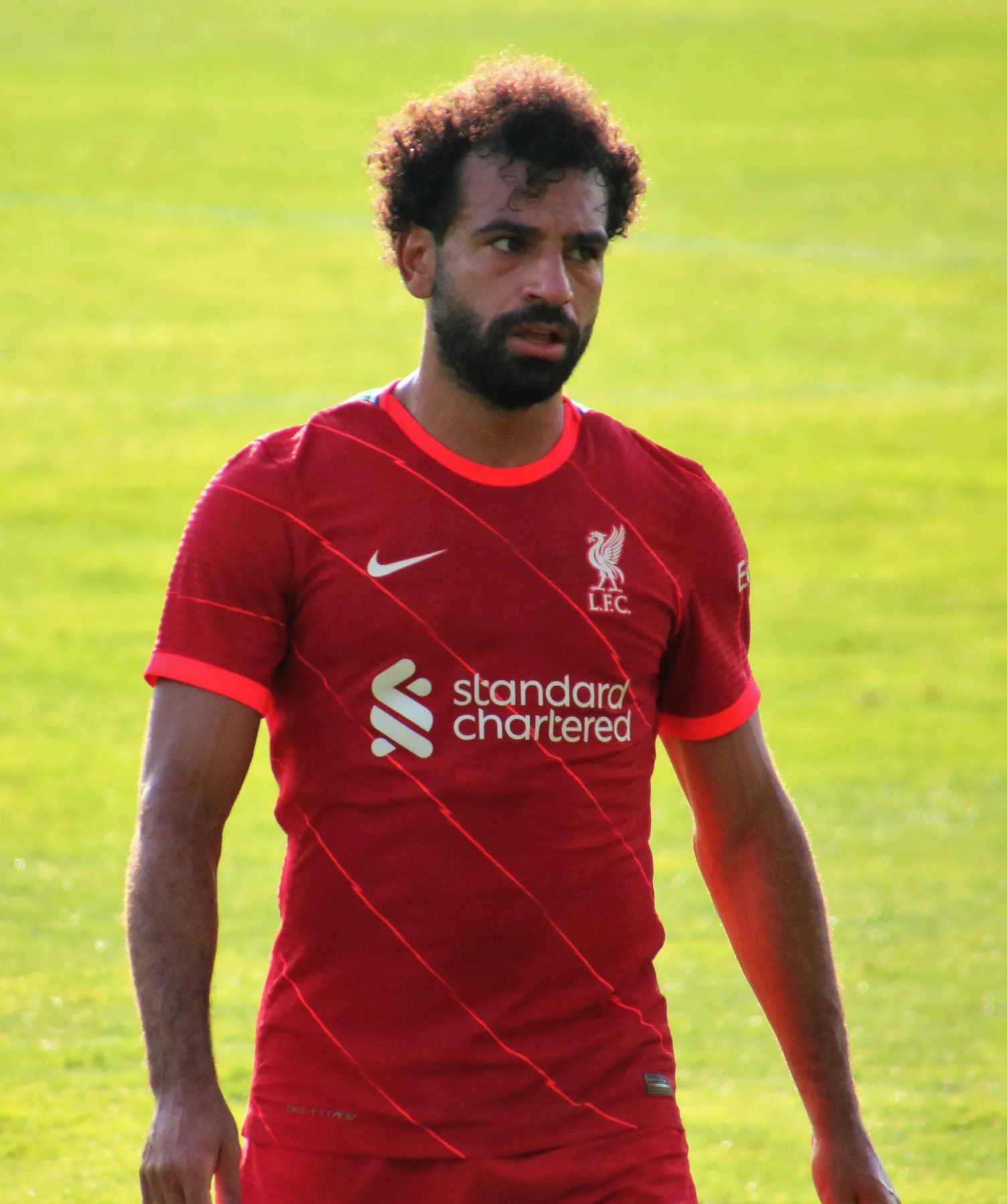
Mohamed Salah for Liverpool in a pre-season friendly against Mainz 05, 2021
Mohamed Salah for Liverpool in a pre-season friendly against Mainz 05, 2021.Photo: Werner100359, CC BY-SA 4.0, Wikimedia Commons

Imagine a child leaving at 10am and not returning until midnight.

Ghamry El-Saadany, his first coach

Mohamed Salah and four buses to training

Principle. Access is part of the pathway

Mohamed Salah grew up in Nagrig, a farming village in the Nile Delta. At 14 he joined Arab Contractors in Cairo. His school let him leave early, and most of the time he travelled alone. A minibus to Basyoun, another to Tanta, another to Ramses station in Cairo, then one more to training, and the same trip home. He spent six years at Arab Contractors, made his senior Egypt debut in October 2011, and later scored 257 goals for Liverpool.

Lesson. Talent is spread across the whole country, access is not. A pathway brings the training to the child, or brings the child to the training at a cost the family can carry.

Discussion. Which talented 13-year-old in your region never reaches your club because of distance?

Sources. BBC Sport, 13 August 2025, updated 3 June 2026

Closer to home

The same questions, asked in Saudi football.

Saad Al-Shehri and the first-team offer

Principle. Staff who stay with a generation carry the model

Saad Al-Shehri chose the long road through youth football. In 2015 he won the Saudi Pro Youth League with Al-Nassr's under-19s. He took the Saudi under-20s to the Asian Cup final in 2016 and to the round of 16 at the 2017 U-20 World Cup.

Your call. Al-Nassr offers him its first team. In his place, would you take it?Answer in the chat during the session.

What happenedHide

He turned down the Al-Nassr first-team job because he felt the timing was wrong. In 2018 he took over the under-23s and led them to Tokyo 2020. In June 2022 in Tashkent his team beat Uzbekistan 2-0 to win Saudi Arabia's first AFC U-23 Asian Cup, with a clean sheet in all six matches.

I hope this is not the end but just the start of our preparations for Paris 2024.

Saad Al-Shehri

Lesson. An age-group job can be a career. A coach who follows one generation from under-19 to under-23 builds the trust that wins tournaments.

Discussion. What would make a top young Saudi coach choose an age-group job over a first-team job?

Sources. FIFA, 15 April 2024; AFC, 20 June 2022

506games for Al Hilal by the end of the 2025/26 season, after coming through its academy

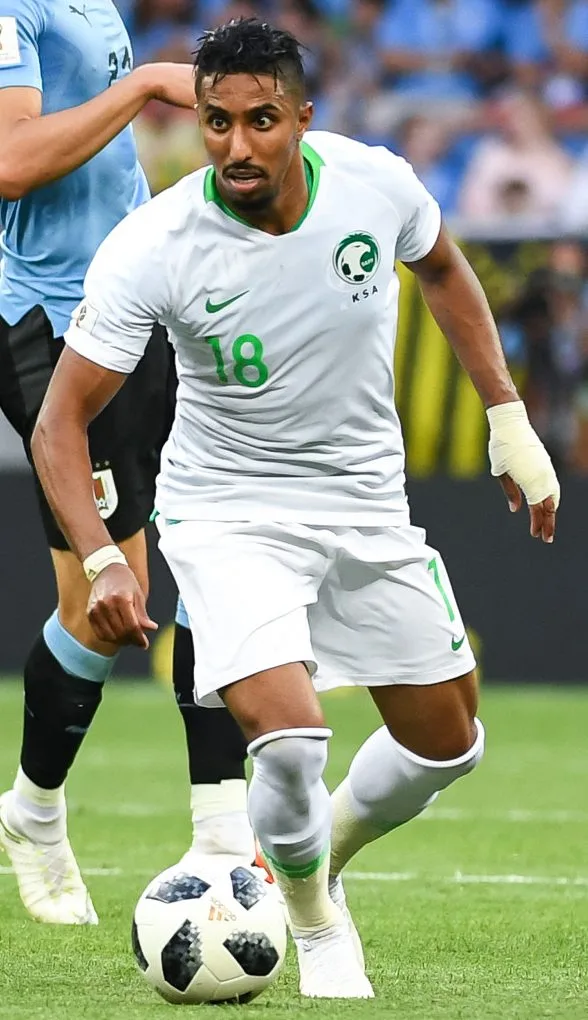
Salem Al-Dawsari (no. 18) for Saudi Arabia against Uruguay at the 2018 World Cup
Salem Al-Dawsari (no. 18) for Saudi Arabia against Uruguay at the 2018 World Cup.Photo: Svetlana Beketova, CC BY-SA 3.0, Wikimedia Commons

Salem Al-Dawsari, from the Al Hilal academy to Asia's best

Principle. The academy plans the route after the debut

Salem Al-Dawsari came through the Al Hilal academy and scored in his first Saudi Pro League match on 24 November 2011. In 2018 he went on a short loan to Villarreal and came off the bench in a 2-2 draw with Real Madrid. In 2019 he scored in the final as Al Hilal won the AFC Champions League, and at the 2022 World Cup he scored the winner against Argentina. By the end of the 2025/26 season he had played 506 games for Al Hilal, scored 147 goals and won 24 trophies. He was AFC Player of the Year for 2022 and again for 2025.

Lesson. A homegrown first-team player needs a planned route. A real debut, real minutes, and a step into a harder league when the time is right.

Discussion. What is the next Al-Dawsari in your club missing right now, minutes, a loan, or a coach who believes in him?

Sources. Al Hilal, player profile; Saudi Pro League, 4 November 2023

Saudi U-17, a national team that played a year up every week

Principle. Play up, every week

In August 2024 SAFF put the national team of players born in 2008 into the Saudi U-17 Premier League, made up of 2007-born players, as an extra team that did not affect other clubs' points. The team trained and played some matches at the Mahd Academy in Riyadh, which allowed for schooling and family commitments. Its forward Abdulrahman Sufyani set a league record with 45 goals. Saudi Arabia then qualified for the U-17 World Cup after a gap of 36 years. The last time had been 1989. In Qatar in November 2025 the team lost 1-0 to Austria, beat New Zealand 3-2 and lost 2-0 to Mali.

Lesson. Weekly matches against older opponents count for more than a few camps. A group-stage exit also shows the work is not finished.

Discussion. Which of your best under-15 players should be playing every week against under-16s?

Sources. Saudi Press Agency, 16 August 2024; SAFF, 16 June 2025; SAFF, U-17 World Cup results

Clips

Bio-banding at the academy, Thomas BroichBorussia DortmundAn academy director who was a late developer himself. Watch it after the reveal in the selection meeting above.

More to watch

How your birth month impacts your successMemeable DataBirth-month data from top-level football, explained in a few minutes.
Dan Ashworth on what a technical director doesTNT Sports FootballThe man behind the England DNA on hiring coaches who fit the philosophy.
The impact of a first-team debut for young playersChannel 4 SportThe last step of the pathway, a first-team debut, seen from the player's side.

Homework

Finish your Academy Blueprint and send it

Work on it alone, or together with colleagues from your club. Fill in the templates on this site, or print the PDFs.

For the season

The last reflection of the course.

Which decision in your academy will you now check against the model first?

After the course

The Academy Blueprint

The ten templates stay here. Fill them in with your staff, print them, and bring them to your first season meeting.

All templates